free · no sign-up
Pupillary Distance Test
A 478-point measurement of the distance between your pupil centres, drawn on your own photo. Pixels are exact for that photo; millimetres need a known-size reference in the same plane, which you set yourself.
What is my pupillary distance?
Upload a photo
Drag and drop, or choose a file
What this measures
Two pupil centres, one distance
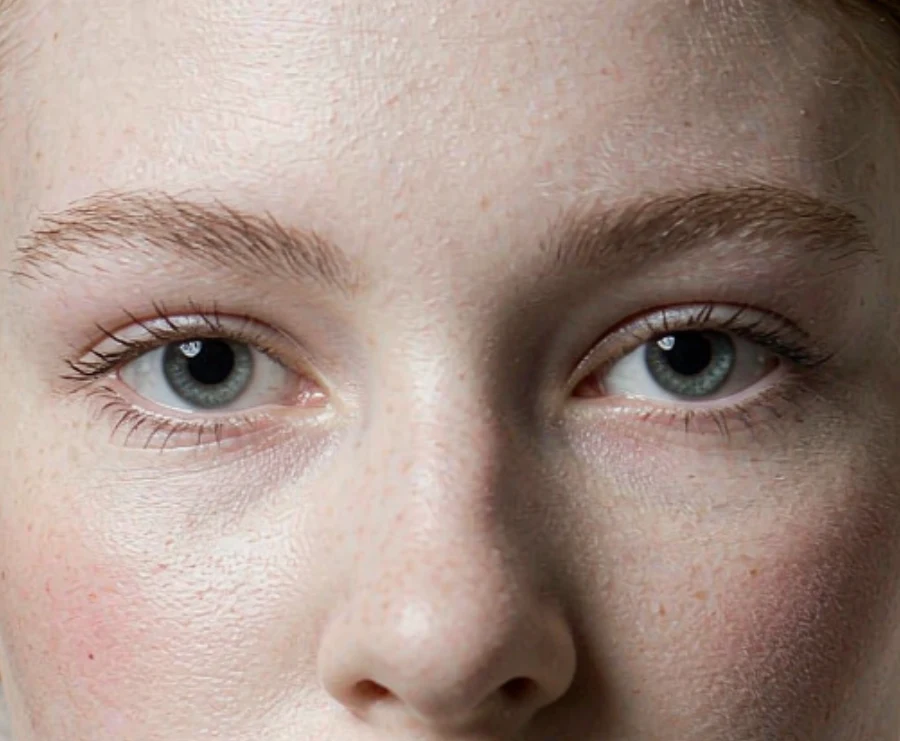
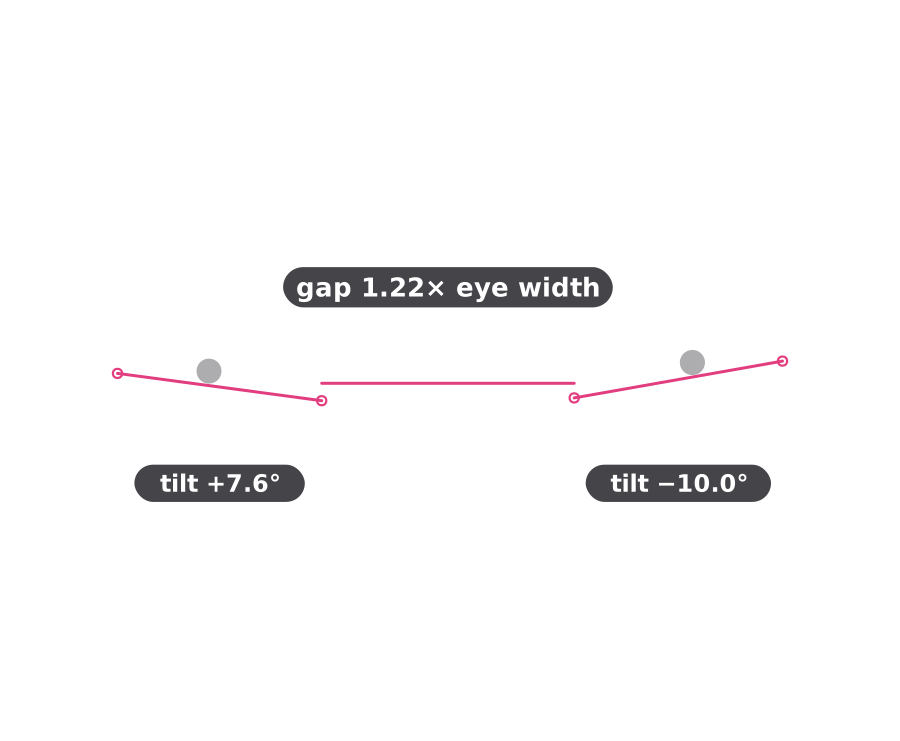
The eye-area landmarks are where the pupil centres come from. In the tool itself the two centres and the line between them are drawn on your own photo, and a ruler you set against a standard card turns pixels into millimetres.
Example drawn on an AI-generated portrait. Your own read draws the same layer over your photo, locally — the image is never uploaded.
One-time · no subscription
See the full Dating Report
The free read is complete. The $12.90 Face Report explains what the numbers mean; the $17.90 Dating Report adds the photo audit, style anchor, bios, market fit, ranked plan and 8-week schedule — one payment, no subscription.
Where should we send your report?
Your PDF and permanent link go to this address. Stripe only handles the card — no account is needed. Already signed in? We use your account email automatically.
One payment. No subscription, no auto-renewal, nothing to cancel.
Already own the Face Report? The Dating Report upgrade is $5.00. See a complete sample report first.
One payment · nothing to cancel
Every chapter, mapped to the three tiers
The free scan prints 7 of these numbers live. The $12.90 Face Report writes out all 26 of its chapters and explains each one. The $17.90 Dating Report includes 26 of them and adds 7 that turn a diagnosis into a plan.
| Chapter number | Chapter | Free scan $0 7 numbers live | Face Report $12.90 26 chapters | Dating Report $17.90 33 chapters |
|---|---|---|---|---|
| 01 | Your report at a glance | Not included | Included | Included |
| 02 | Your starting read | The number only, live on the page | Included | Included |
| 03 | What's working | Not included | Included | Included |
| 04 | Your first four weeks | Not included | Included | Included |
| 05 | Where you sit | Not included | Included | Included |
| 06 | Every region, with its reference band | Not included | Included | Included |
| 07 | Your Photo Presentation Score | Not included | Included | Included |
| 08 | Your AI styling concept | Not included | Included | Included |
| 09 | Hairstyles on your photo | Not included | Included | Included |
| 10 | Your 12-season palette | Not included | Included | Included |
| 11 | The six geometry signals | The number only, live on the page | Included | Included |
| 12 | Symmetry and the midline | The number only, live on the page | Included | Included |
| 13 | Facial thirds and fifths | The number only, live on the page | Included | Included |
| 14 | The eyes and brows | The number only, live on the page | Included | Included |
| 15 | Nose and midface | Not included | Included | Included |
| 16 | Lips and smile | Not included | Included | Included |
| 17 | Jaw, chin and mouth | The number only, live on the page | Included | Included |
| 18 | Skin tone and photographic observations | The number only, live on the page | Included | Included |
| 19 | Your ranked plan: face and styling | Not included | Included | Included |
| 20 | Day-to-day: routine, habits, frames | Not included | Included | Included |
| 21 | Your Face DNA | Not included | Included | Included |
| 22 | Fixed vs. movable: what you can actually change | Not included | Included | Included |
| 23 | How this report was measured | Not included | Included | Included |
| 24 | What this report can't tell you | Not included | Included | Included |
| 25 | Boundaries: what this report will never do | Not included | Included | Included |
| 26 | Methodology, sources & your rights | Not included | Included | Included |
| 27 | Photo leverage audit | Not included | Not included | Included |
| 28 | Outfit & style anchor | Not included | Not included | Included |
| 29 | Bio & opening lines | Not included | Not included | Included |
| 30 | Market fit: where this profile works | Not included | Not included | Included |
| 31 | The dating action plan | Not included | Not included | Included |
| 32 | Your 8-week Dating Standards Plan | Not included | Not included | Included |
| 33 | Reality check & safety notes | Not included | Not included | Included |
the number only — the free scan prints it live the full chapter, written out not included Dating Report only — 7 chapters the $12.90 Face Report does not contain
One payment of $17.90, no subscription. Saved web report + emailed PDF. Own the Face Report already? The seven extra chapters cost $5.00 at checkout — see them argued one by one.
AI image tools · credits
Transform your look with AI
Preview a new hairstyle, a full glow-up, or a younger you — all generated on your own photo. Optional, prepaid, credits never expire. See the difference before you commit.
AI image previews
Glow-Up Pack
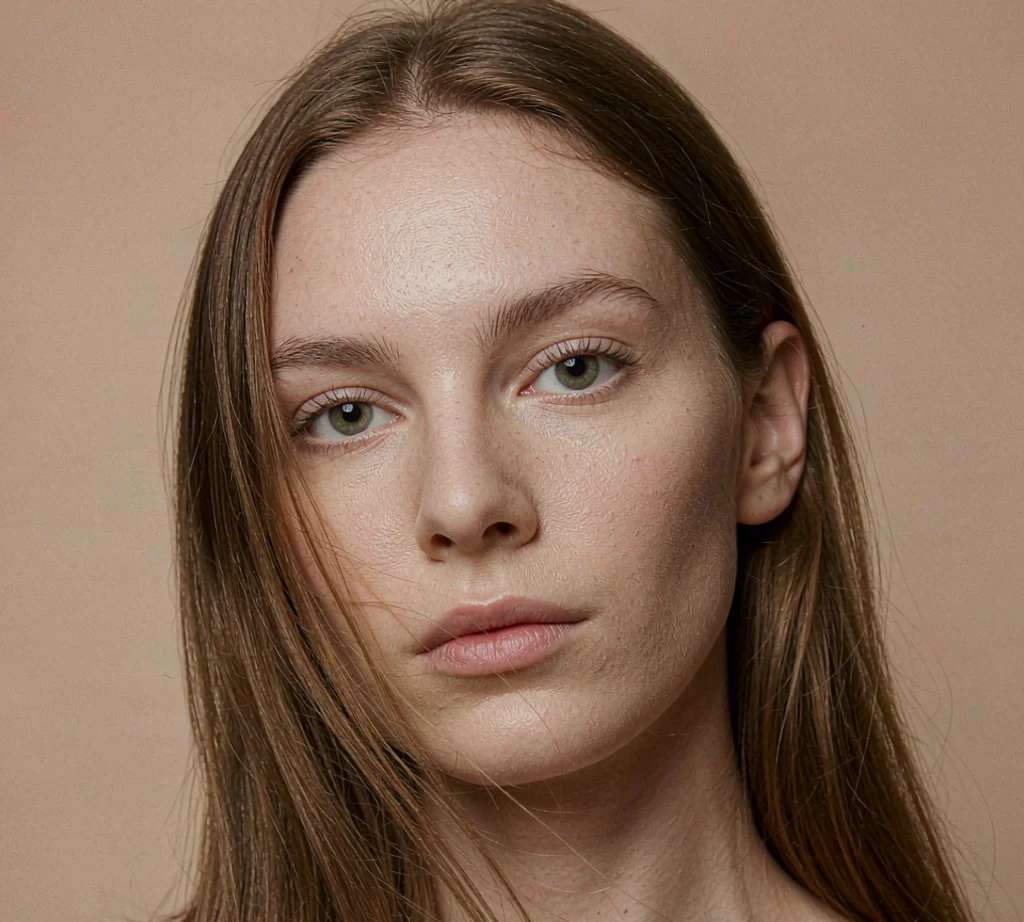
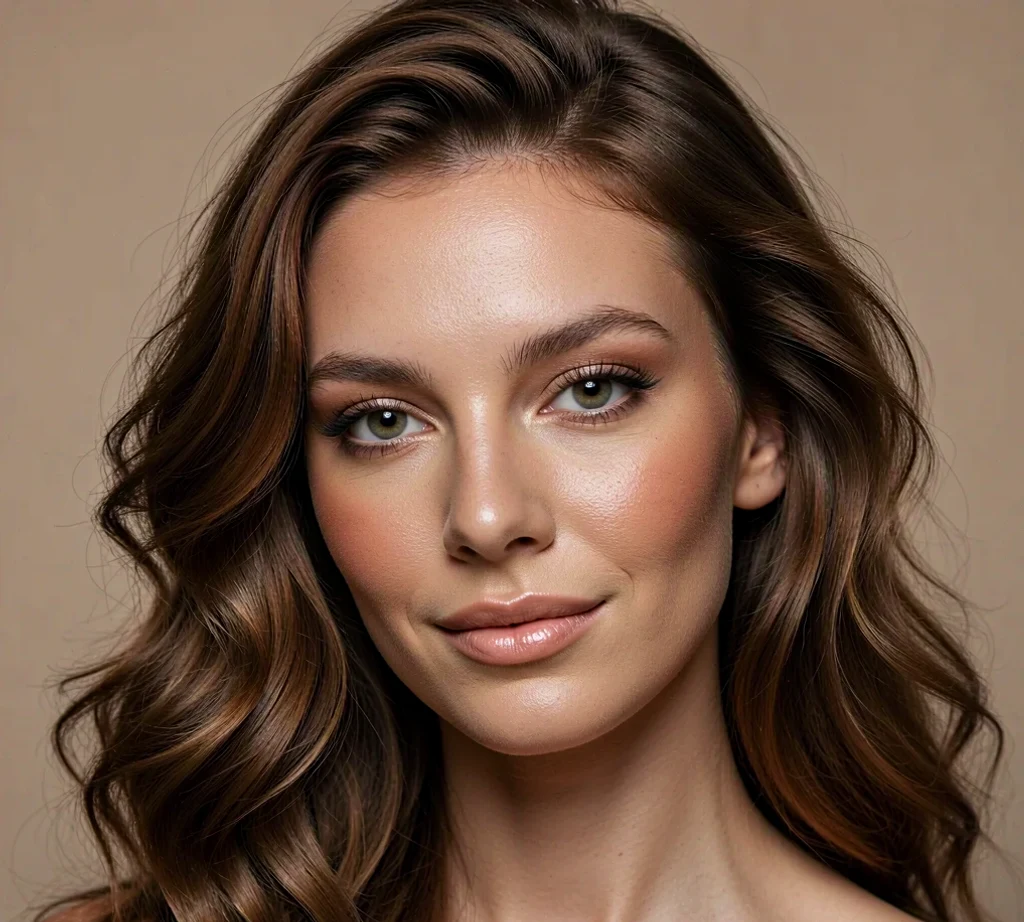
See your fully polished self — makeup, grooming, skin and style — generated on your own photo, plus four isolated upgrades to compare side by side.
See it on my photo →
Hairstyle Try-On
Try six salon cuts and colours on your own face before you book, so you never gamble on a bad cut again.
See it on my photo →

Photo Studio
Stack hair, styling and age changes into one fully styled look on your photo — your mood board, generated.
See it on my photo →
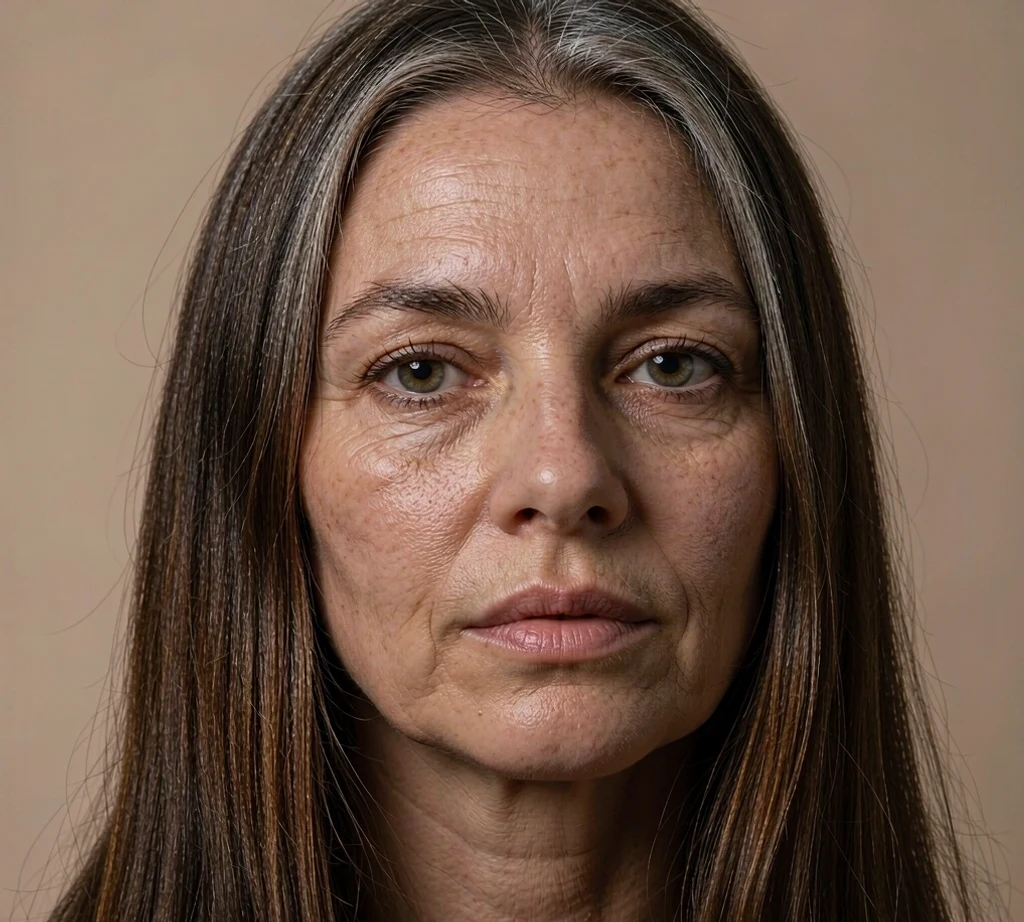
Time Machine
Preview a younger and an older version of yourself, side by side, on your own photo.
See it on my photo →Procedure Preview
A conservative, no-surgery simulation of subtle refinements — see the difference before you ever consult a clinic.
See it on my photo →
AI decision tools free progress board
Optional, never required
Want the free Photo Checklist instead?
Ten fixes you can make in an afternoon, as a single PDF. We send one honest tip a week — no anxiety marketing, no data selling.
We use double opt-in for The List: we only add you after you confirm the link in the email. The checklist itself arrives right away, whether you tick the box or not. Read our Privacy Policy.
No thanks, take me to the report → see the report
How this pupillary distance test works
You choose a clear, front-facing photo. The image is drawn into a canvas inside your browser, resized, and its metadata stripped — no copy is uploaded, stored or sent to a server. The 478-point face model is loaded on your device (about 15 MB, once, cached) and returns normalised coordinates. Everything after that is coordinate arithmetic: midpoints, distances, a straight line between two points. There is no language model, no image generation, no API call and no per-use token cost.
| Step | What actually runs |
|---|---|
| Find the pupil centres | The 478-point face model returns five iris points per eye. We average each set into one centre. If a device only gives the 468-point set, the iris ring is missing, so we fall back to the midpoint of the eye corners and label the result "estimated" — we never silently pretend it was measured. |
| Measure in pixels | The distance between those two centres is computed in the coordinate space of the resized canvas. That pixel number is exact for this photograph. |
| Set a scale, if you want millimetres | Pixels are not millimetres. Hold a standard card (85.6 mm wide) in the same plane as your eyes, drag the two ruler handles onto its edges, and we divide the pupil distance by the measured card width and multiply by 85.6. |
| Draw it on your photo | Both pupil centres, the connecting line and the ruler are drawn over your own photo in a local canvas. Nothing is uploaded. |
What the numbers mean
The pixel distance is a measurement of this photograph. The millimetre value is a conversion that depends entirely on the reference you set: change the ruler and the number changes. Both are printed with the scale you used, so you can see exactly where the number came from.
Limits, honestly
| Limit | What it means here |
|---|---|
| Perspective | If the card is closer to the lens than your eyes, it looks wider and the mm number comes out too small. Keep the card in the same plane as your face. |
| Head rotation | A turned head shortens the apparent distance between the pupils. We print the measured head roll and refuse the mm estimate when it is more than a few degrees. |
| Not a prescription | Opticians measure PD with a pupillometer or a ruler at a fixed working distance, including near-PD. A selfie cannot. Use this number for curiosity, never to order glasses. |
| No clinical or medical claim | Nothing here diagnoses vision, alignment, strabismus or any eye condition. |
Why this is free and stays free
A coordinate calculation costs us nothing per run, so there is no reason to blur it, gate it behind an email, or wrap it in a subscription. The optional reports are a separate one-off purchase about photo presentation and dating decisions — they are not needed to read anything on this page.
Tips for a more consistent read
- Use a recent, front-facing, well-lit solo photo with your whole face visible.
- Face a window; avoid overhead light and harsh direct sun.
- Keep the camera at eye level and at arm's length or further, with no wide-angle distortion.
- If you want millimetres, hold a standard card flat against your forehead, in the same plane as your eyes.
- Retake in the same light and distance if you want to compare two readings.
What this tool does not do
It does not rate you, rank you, predict matches, estimate your age or ethnicity, or make any medical, dermatological or ophthalmological claim. Entertainment & self-insight only. Not medical, psychological, or dermatological advice. No procedures, surgery, fillers or injectables are recommended anywhere on this site.
The complete formula, weights and limitations are public: See exactly how the score is calculated. If we can't measure it honestly, we say so — before you pay.
Frequently asked questions
Is the pupillary distance test really free?
Yes. No account, no email gate, no blurred result, no card. It is pure geometry computed on your device, so there is no per-use cost to pass on. The optional reports are separate one-off purchases ($12.90 / $17.90), never a subscription.
Is my photo uploaded or stored?
Your photo is processed on your device. It is never uploaded, stored, sold, or used to train AI. Free scans leave no image behind — everything happens on your device. Only numeric scores are kept for 2 hours, then deleted. The 478-point model is downloaded to your browser; your photo never leaves it. Re-drawing the image into a canvas also strips EXIF metadata, including location.
Does this use AI or a language model?
The face landmark model runs locally in your browser with WebAssembly. It is a fixed coordinate detector, not a generative model: no prompt, no API call, no cloud inference and no token spend. The result is midpoints, distances and lines drawn with canvas arithmetic.
Can I use the millimetre number to order glasses?
No. A selfie cannot replace a pupillometer or an optician’s ruler at a fixed working distance, and near-PD differs from distance-PD. The mm value here is an estimate that depends on the reference card being in the same plane as your eyes. Use it for curiosity only, never for a prescription.
Why do I need a card to get millimetres?
A photo has no scale. The same face at two distances produces two different pixel distances. A standard card is 85.6 mm wide; dragging the ruler onto its two edges tells us how many pixels one millimetre covers in that exact shot.
What if the 478-point model does not load?
We say so instead of inventing a number. This tool needs real landmarks; if the model is unavailable (offline, WASM blocked, no face found) you will see a plain explanation and can retry. We never fall back to a guessed measurement.
What can I do with the result?
Copy the summary, compare two photos taken the same way, or move on to the free Attractiveness Test and Eye Shape Detector. Nothing on this page requires the paid reports.
Please read this before you use the result
- Entertainment & self-insight only. Not medical, psychological, or dermatological advice.
- No procedures, surgery, fillers or injectables are recommended anywhere on this site.
Measured from 478 landmarks on your device, not from a clinical instrument. One photo, one pose, one light — the numbers describe that photograph only.