Evidence-based guide · 8 min read
Why Am I Not Getting Matches? (And What Actually Moves the Needle)
An evidence-based audit of the three variables that decide swipe decisions — and an honest explanation of why your face score is not one of them.

Table of Contents
- Why am I not getting matches? Start with the three variables that decide it
- Is my first photo the problem?
- Does my bio give anyone something to reply to?
- Are my filters and settings shrinking my pool?
- Does my face rating decide my match rate?
- What do the platforms' own numbers say about swiping?
- How do I run a 30-minute profile audit?
- When is the problem not the profile at all?
Why am I not getting matches? Start with the three variables that decide it
The question "why am I not getting matches" gets answered with personality advice far more often than it should. Dating apps are, structurally, a filtering system: someone sees a small card, decides in a second or two, and moves on. Three variables control that decision more than anything else — the quality and clarity of your first photo, the amount of usable information in your bio, and the size and fit of the pool the app is actually showing you.
Almost everything else is downstream of those three. Your job, height, hobbies, and the precise shape of your jawline all matter far less than whether a stranger can tell what you look like, whether they can guess what talking to you would be like, and whether you are even in their visible set. That is good news, because two of the three variables are things you can change this afternoon.
Research on rapid impression formation explains why the first photo carries so much weight. Willis and Todorov (2006) showed that people form trait impressions from faces extremely quickly, and that additional viewing time mostly increases confidence rather than changing the verdict. On a swipe interface, you are competing inside that first fraction of a second — which is exactly why photo clarity beats almost every other optimisation.
Is my first photo the problem?
In practice, yes — more often than any other single factor. A primary photo fails for mechanical reasons long before it fails for aesthetic ones.
What a good primary photo has to do
Your first photo has one job: communicate what you look like, unambiguously, at the size of a thumbnail. That means a single clear subject, your face filling a reasonable share of the frame, even lighting, eyes visible, and no competing detail. Sunglasses, hats pulled low, group shots, heavy filters, and photos taken from too far away all fail this test for the same reason: they remove information the viewer needs.
The photo mistakes that cost the most
The most expensive mistakes are the ones that cost you a decision you never knew was happening. A group photo as your first image forces the viewer to guess which person you are; most will not spend the effort. A photo shot at night, or backlit by a window, drops the detail that makes a face memorable. A gym mirror selfie signals effort but not identity. None of these are moral failings — they are simply low-information images, and low-information images lose in a high-speed interface.
If you want an objective read on the signals discussed here before you start changing things, run the free attractiveness test on the Face Rate main site. It gives you a structured breakdown of the same cues — framing, symmetry, lighting, clarity — without asking for an account.
Does my bio give anyone something to reply to?
A bio is not a résumé and it is not a personality test. It is a prompt generator. Its only real job is to give a stranger a specific, low-effort thing to say back to you.
A bio structure that actually produces openers
Three short lines are enough. Line one: something concrete and checkable about your life — a job, a place, a habit, a recurring weekend. Line two: something specific you enjoy, named narrowly enough to be replyable ("sourdough that refuses to rise" beats "food"). Line three: an invitation in the form of a question or a either/or. Bios that say "just ask" or "swipe right if you can handle me" generate nothing, because they hand all the work to the other person.
Length matters less than specificity. A bio that is short but concrete outperforms a long bio that is generic. If you are unsure where your own profile sits, the honest answer is that most people over-explain their personality and under-explain their actual week — the thing someone would be joining.
Are my filters and settings shrinking my pool?
Filters are the least glamorous and most underrated cause of "why am I not getting matches". Every constraint you add — age band, distance, height, education, relationship intent, deal-breaker toggles — removes people from the stack before your photos are ever seen. Narrow is fine when it is deliberate; narrow is costly when it is accidental.
Two settings deserve a specific look. First, distance radius: expanding it by a few miles usually increases the pool far more than people expect, because population density is not linear. Second, "already seen" and hidden-list behaviour: on several apps, a profile that was passed once will not resurface soon, and an old, stale profile can effectively be invisible. If you have been on an app for years without resetting, you may be showing a weaker version of yourself to a pool that already voted.
The fix is boring and effective: write down your current filters, loosen exactly one of them for two weeks, and compare. One variable at a time is the only way to learn which constraint is actually costing you.
Does my face rating decide my match rate?
No — and this is where a lot of dating content quietly lies to you. A face rating, a symmetry score, or a golden-ratio measurement describes geometric properties of a photograph. It cannot tell you how often you will match, because matching is a two-sided decision made by a specific person in a specific pool under a specific interface.
That does not mean attractiveness research is meaningless. Langlois and Roggman (1990) found that digitally averaged composite faces were rated as more attractive than the individual faces they were built from, and Langlois and colleagues' later meta-analytic review (2000) documented strong agreement between raters on who is attractive — including across cultures. There is a real, measurable consensus signal in facial attractiveness. What that literature does not do is predict an individual's outcomes. Consensus at the group level is not destiny at the personal level, and the gap between the two is where every honest answer to "why am I not getting matches" actually lives.
You can read a plain-language overview of what attractiveness research does and does not establish at Wikipedia's physical attractiveness article. It is a reasonable starting point for the citation trail, including the averageness and symmetry debates.
So use a rating as feedback about presentation — lighting, framing, grooming, expression — and not as a verdict about your prospects. A score is a checklist, not a prophecy.
What do the platforms' own numbers say about swiping?
Public, checkable data here is thinner than blog posts about it suggest. Dating platforms publish selective figures in product blogs and press material; the widely cited swipe statistics circulating online frequently originate from third-party experiments rather than from the companies. Treat any precise percentage you see quoted about swipe behaviour with suspicion unless it links back to a platform's own disclosure or a peer-reviewed study.
What is well documented is the shape of the market rather than the mechanics of the swipe. Pew Research Center's surveys of online dating in the United States have repeatedly found that online dating is now mainstream across age groups, while also finding substantial frustration with the experience — a combination that explains a lot. High participation plus high frustration is exactly the environment where small presentation improvements matter, because volume no longer guarantees attention. See Pew Research Center for the underlying survey programme and its published reports.
The practical takeaway is not a statistic; it is a sequencing rule. Presentation is the cheapest variable to change, so change it first, measure, and only then touch filters, apps, or paid features.
How do I run a 30-minute profile audit?
Set a timer and work in this order, because this is roughly the order of impact:
- Primary photo (10 minutes). Export your three best candidates, view each at thumbnail size on your phone, and pick the one where your face is unmistakable. If none pass, schedule a photo session instead of tweaking.
- Photo set (5 minutes). Keep four to six images that do different jobs: one clear face shot, one full-body, one social, one doing something. Delete duplicates and anything with heavy filters.
- Bio (10 minutes). Rewrite it in three concrete lines using the structure above. Read it as a stranger and ask: is there a specific thing I could reply to?
- Filters (5 minutes). Write down current settings. Loosen exactly one. Leave it for two weeks.
Then measure. Screenshot your match count before and after; do not trust memory. A change you cannot measure is a change you will argue about with yourself later.
When is the problem not the profile at all?
Sometimes the honest answer to "why am I not getting matches" has nothing to do with your photos. Three cases are common and worth naming.
The first is pool size. In a thin geographic market, or in a demographic slice that is underrepresented on the app you chose, better presentation has a ceiling. The fix is distribution, not optimisation: try a different app, widen distance, or both.
The second is app fit. Apps differ in what they reward — some are photo-first and fast, others weight prompts and text. If your profile is strong and results are still flat, you may simply be on the wrong interface for the way you present.
The third is expectation mismatch. Many people are filtering for a narrow type and interpreting every non-match as a profile defect. That is a preference, not a bug, but it is worth knowing which one you are dealing with before you spend weeks editing photos. Two free reads help here: are my dating standards too high? walks through five self-tests, and the six-question dating standards test grades which part of your bar is doing the most filtering.
If you want the whole thing assessed in one pass — photos, bio, which app fits the way you present, and how your standards interact with all of it — the Face Rate Dating Report is a one-time teardown rather than a subscription. It is built for people who would rather fix the system once than keep guessing.
Conclusion: the shortest honest answer
Why am I not getting matches? Usually because your first photo is low-information, your bio gives nothing to reply to, or your filters are smaller than you think — and none of those are facts about your face. Fix them in that order, measure the change, and be sceptical of anyone who promises that a geometric score will tell you your future.
Start where the leverage is: run the free attractiveness test for a baseline read on presentation, then use the 30-minute audit above. If you want it done with you rather than by you, the one-time Dating Report covers the same ground end to end.
What a photo fix looks like
Same face. Same bones. Different result.
The two variables that move a first photo most, shown on the same pixels. Nothing is retouched, and nothing about the face changes — which is the argument of this whole guide.
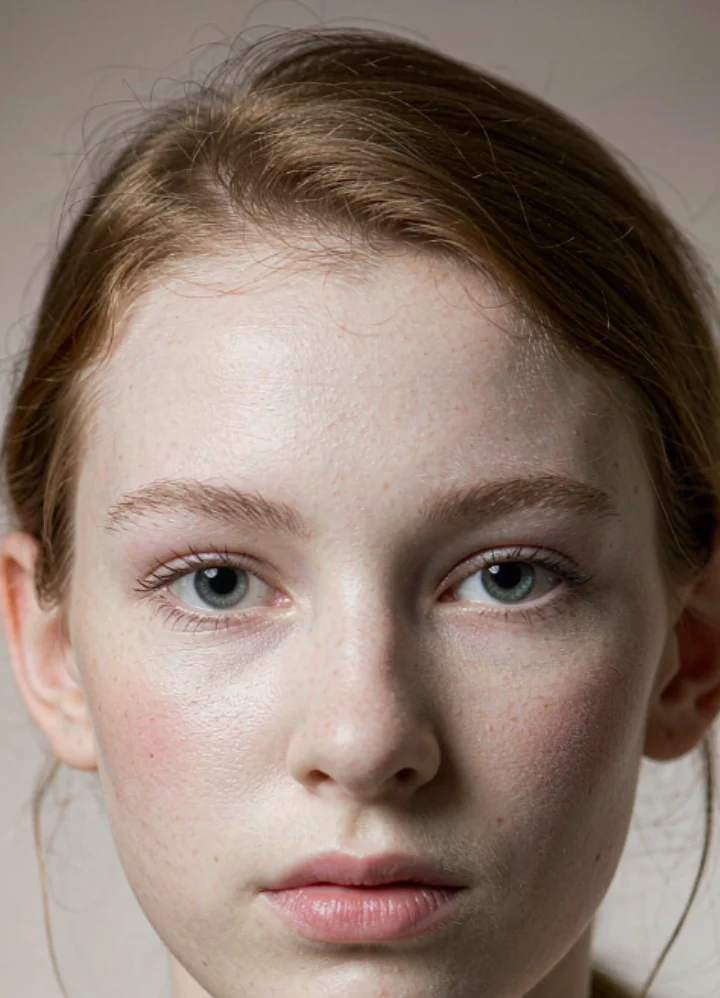
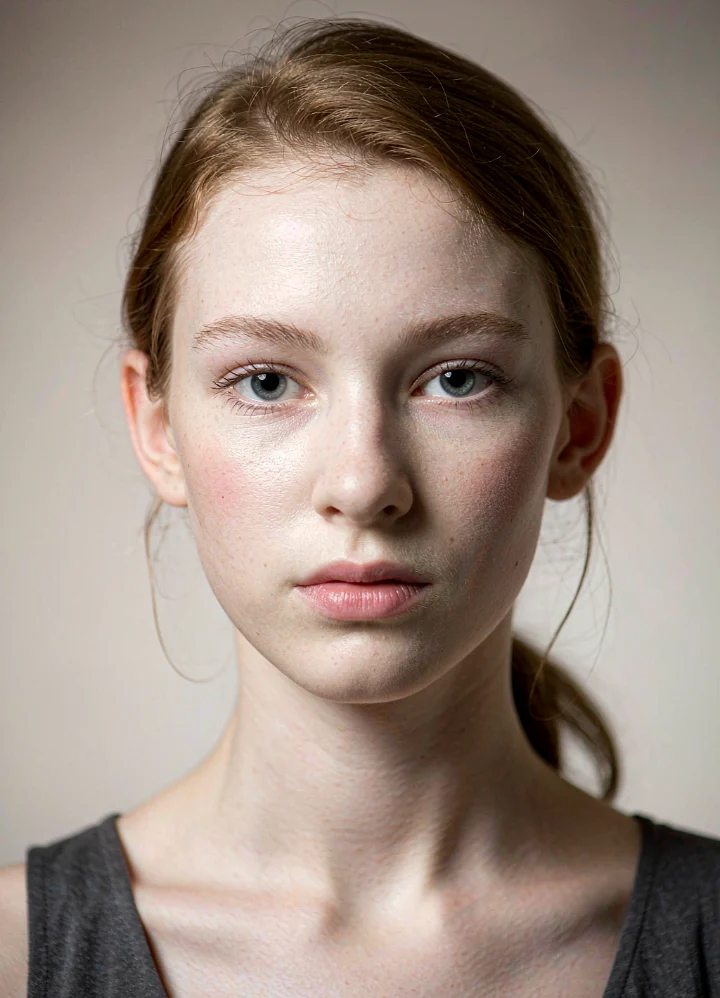
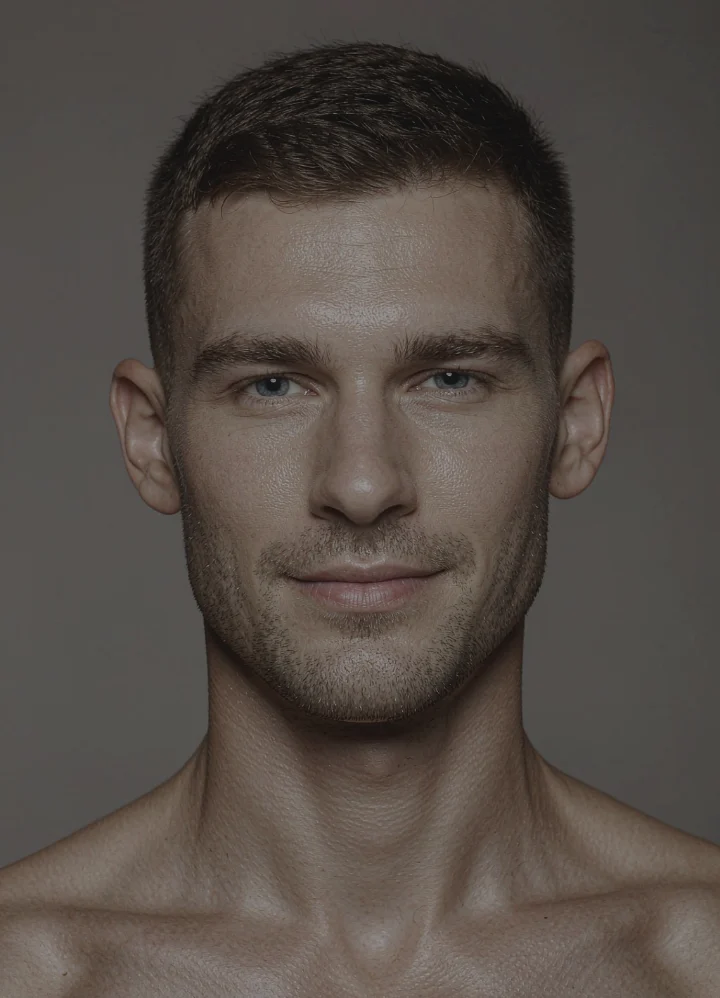
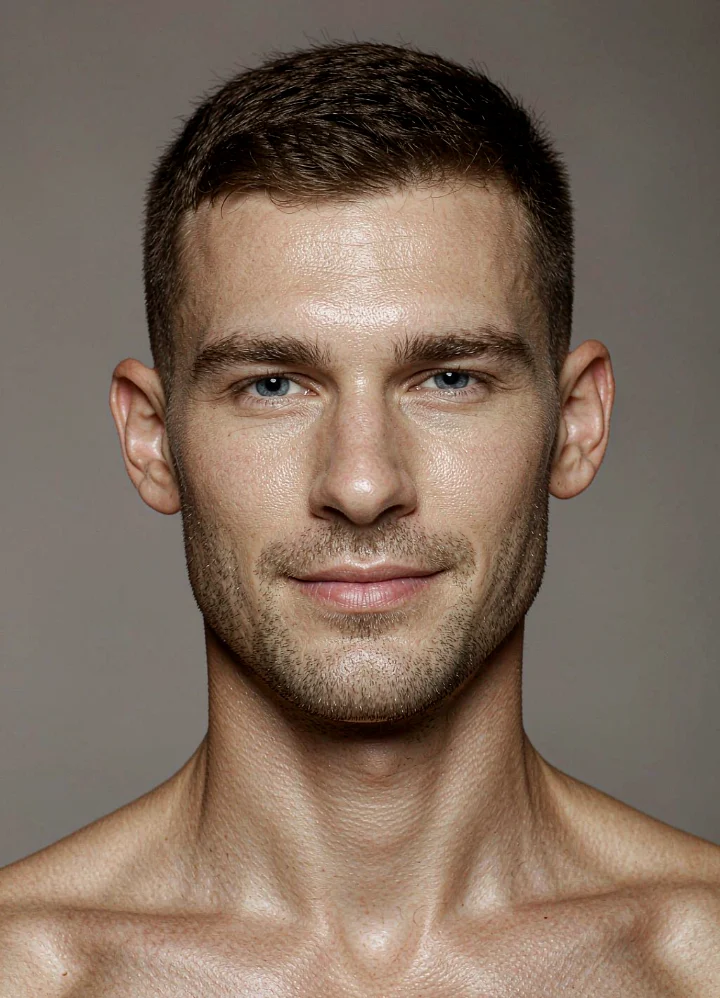
Framing and light are free and reversible. If your profile is underperforming, they are the first two things to change — before anything else on this site.
Next step
Start with the free read
See the whole result with no sign-up, then decide whether you need the one-off report.
One payment. No subscription, no auto-renewal, nothing to cancel. If we can't measure it honestly, we say so — before you pay.
Frequently asked questions
Why am I not getting matches on dating apps?
In most cases it is profile mechanics — a first photo that does not read at thumbnail size, a bio with nothing to reply to, and filters shrinking your visible pool. It is rarely your face. See the audit above.
Does a face rating decide my match rate?
No. The Score is a weak geometric signal. It does not predict matches, dates, replies, or your worth. A single photo cannot model another person's preference, timing or context.
What should I fix first?
Your first photo. Take one recent, well-lit solo shot with your whole face visible and make it photo #1. Then rewrite your bio with two specifics.
How long before I judge a change?
Two weeks per change. Matching is noisy day to day; change one variable at a time and compare against a screenshot baseline.
Can better lighting really help?
Yes — more reliably than almost anything else. Even frontal light increases the information a viewer gets from your face in under a second.
Is this medical or psychological advice?
No. Entertainment & self-insight only. Not medical, psychological, or dermatological advice.
Please read this before you use the result
- Entertainment & self-insight only. Not medical, psychological, or dermatological advice.
- The Score is a weak geometric signal. It does not predict matches, dates, replies, or your worth.
- Estimated with a lightweight on-device geometry heuristic — not a 478-landmark clinical measurement.
Optional, never required
Want the free Photo Checklist instead?
Ten fixes you can make in an afternoon, as a single PDF. We send one honest tip a week — no anxiety marketing, no data selling.
We use double opt-in for The List: we only add you after you confirm the link in the email. The checklist itself arrives right away, whether you tick the box or not. Read our Privacy Policy.
No thanks, take me to the report → see the report